Campus

Published on Monday, September 8, 2008

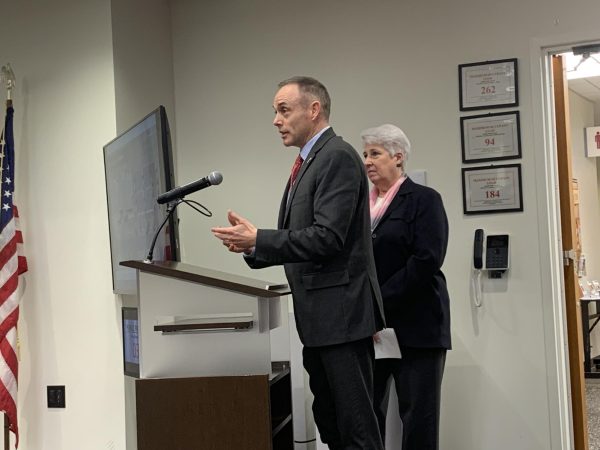
Storm chaser gives lecture at NIU


By GILES BRUCE
Last updated on 00/00/0000 at 12:00 a.m.

When tornado sirens begin to sound, most people seek shelter or go to a basement. But not Paul Sirvatka - he heads straight to the storm.

“I know this tornado really well because we drove through it,” Sirvatka said while pointing at a picture of a tornado. He gave a lecture entitled “Tornadogenesis and the Nature of Tornadoes”
Friday at Davis Hall.

Besides being a professor of meteorology at College of DuPage, Sirvatka is a storm chaser. When conditions are right for a tornado, he is off on the road finding out how tornadoes come to
be.

Among his conquests is the 1990 Plainfield tornado, the only F5 tornado to ever hit the Chicago area. The storm killed 29, injured 350 and caused $165 million in damage along a 16 mile path through Plainfield, Crest Hill and Joliet, according to the National Weather Service (NWS).

“It was intense,” Sirvatka said. “It was intense to be in.”

He remembered 80 to 90 mph winds at the Aurora airport and driving through DeKalb, which was battered by hail as kids ran for shelter, to I-88, where he was forced to blow the toll.

“They didn’t have I-Pass then,” he joked.

One quote summed up a major theme of the lecture.

“I don’t know why there was a tornado in the first place,” he said of the Plainfield tornado.

The theme: There are still many unknowns surrounding tornadoes. To make this point, Sirvatka began his lecture with a famous quote from Donald Rumsfeld, former secretary of defense:

“[T]here are known knowns ... there are known unknowns ... there are also unknown unknowns,” Rumsfeld said at the time.

“Can we know the unknowable unknowns?” Sirvatka asked the group of about 45, consisting mainly of graduate students majoring in geography.

While pointing out that most tornado outbreaks are well-forecasted, Sirvatka criticized the “groupthink” used at many organizations, including the NWS.

“We need to be cynical about tornado reports,” he warned, which freshman meteorology major Robert Niesen heard loud and clear.

“I learned that you can’t always rely on the radar,” Niesen said, who is studying to be a weather forecaster at NWS.

Graduate biogeography major Matt Kwit was required to attend the lecture but enjoys the diversity in topics of these graduate lectures, which take place weekly, he said.

Storm chasing has really taken off in the 20 years since he started, Sirvatka said, but there is one thing he has that many of the newbies don’t: experience.

“I’ve done it so often, I can look at a storm and say, ‘This is what’s going to happen,’” he said.

Comment On This Article

All comments are moderated before being published. We will not edit your comments, but we also will not approve those that are abusive, off-topic, attack another poster or contain information we know to be libelous or false.

During peak weekday viewing times, most comments will be reviewed within six hours. For more detailed information, click here.

After submitting your comment, check below for a confirmation message.


  • Your name:
  • Enter text from image:
  • Your comment:
Question of the Day
Only who can prevent forest fires?
you
me

Sign up to receive Northern Star headlines in your inbox, delivered weekdays at 6 a.m.


Feedback? E-mail us.
Real-time updates of recently viewed articles on the site.

1  "Back to the '80s" rocks the Egyptian Theatre

2  Student Association approves 2 new organizations

3  Flick Pick: 'Ben-Hur' (1959)

4  Let the Grady review panel serve its purpose to...

5  KSO Goes to the Movies